ADMISSIONS OPEN FOR YEAR 2026

What School Readiness Actually Means for Young Children
School readiness is more than knowing letters and numbers. It includes confidence, routine, communication, independence, and the ability to adjust to structured learning.
Muhammad Hassan Khan & Shaista Bibi
7/13/20262 min read

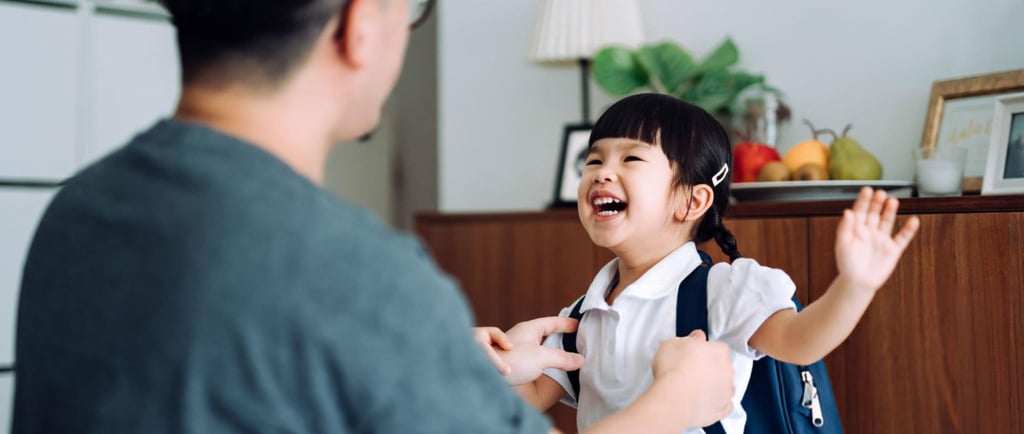
What School Readiness Actually Means for Young Children
Many parents think school readiness is mostly about academic skills. That is too narrow. A child can know a few letters or numbers and still struggle in school if they are not ready to listen, follow routines, communicate, or handle a structured environment.
School readiness is the combination of academic, emotional, social, and practical development that helps a child adjust to primary school successfully. It is not just about being able to recite facts. It is about being able to participate, respond, settle, and grow inside a classroom setting.
Why readiness starts early
The years from age two to five are decisive. This is when children begin building the habits and capacities that shape later learning, including confidence, independence, communication, discipline, and curiosity.
If these foundations are weak, school becomes harder than it needs to be. Children may struggle with separation, instructions, group participation, or even simple classroom routines. The problem is not always intelligence. Often, the problem is that preparation was incomplete.
The parts of school readiness
Real school readiness has several parts. Parents should think about it in a wider way instead of reducing it to reading and counting only.
Literacy foundations: recognizing sounds, letters, and early language patterns.
Numeracy foundations: counting, number recognition, and basic quantity awareness.
Communication: being able to express needs, answer, listen, and participate.
Independence: managing small tasks and following daily routines.
Emotional confidence: feeling secure in a new environment and coping with change.
Social behavior: cooperating with others, taking turns, and adjusting to group learning.
Attention and discipline: staying engaged long enough to complete simple learning tasks.
A child who develops these areas is far better prepared for formal schooling than a child who only memorizes content.
What good preparation looks like
Good preparation does not mean pressuring a child into adult-style academics. That approach is lazy and often counterproductive. Young children need structured, age-appropriate learning that combines care, guided play, repetition, and gradual challenge.
At Al Kamal Education Technology, the documented model for early learners includes Montessori principles, play-based learning, project-based learning, phonics, STEAM exposure, digital learning support, and guided routines across ages 2 to 5. That is the correct direction because it develops both readiness and confidence without ignoring the child’s age.
What parents should watch for
Parents should not ask only, “Can my child read?” They should ask whether the child can handle the environment they are about to enter.
Watch for these signs:
The child follows simple instructions.
The child can separate from parents without excessive distress.
The child can sit, listen, and participate for short periods.
The child can speak clearly enough to express needs.
The child is comfortable with routines and transitions.
The child can complete simple tasks independently.
If these areas are weak, the child may need stronger early foundations before primary school begins.
Why this matters in Ajman
Families in Ajman often face a practical question: how do you find education that is both meaningful and affordable? That is where school readiness matters most. It is not enough for early education to keep children occupied. It should build the habits and strengths that make later schooling smoother and less stressful.
A serious early years center should help parents prepare children for real school life, not just provide supervision. That means structure, progress, communication, and visible development must all be present.
Final section
School readiness is not one skill. It is a set of foundations that prepare a child to enter primary school with confidence and stability. When these foundations are built early, children adjust better, learn faster, and handle structure more easily.
Al Kamal International Studies © All rights reserved 2026
QUICK NAVIGATION
Tel: +971 52 772 7246

Al Kamal International Studies
Ajman | UAE
STAY CONNECTED
GET IN TOUCH
United Arab Emirates
Al Rashidiya 2, Ajman | UAE